EV companies have a hard job. They explain batteries, charging, software, and sustainability to buyers who are often new to all of it. In India, 94.16% of internet subscribers access the internet on mobile, so the site has to work on a phone first. This guide covers the trends worth watching, what drives them, and what to expect next.
Key Takeaways
- Strong EV sites pair visual storytelling with plain explanations of technical products.
- Configurators, charging maps, and range calculators make complex journeys easier.
- Speed, mobile usability, accessibility, and proof matter as much as originality.
- Future sites will link brand, product data, personalisation, and sustainability evidence.
Key Electric Vehicle Web Design Trends
Immersive visual storytelling and purposeful motion
Cinematic photography, 3D models, scroll-based storytelling, and short video show an EV in use faster than dense text. Rivian's site lets visitors build an R1T or R1S in 3D, choosing colour, interior, and accessories. Treat it as a global reference, not an India-market product.
For every visual, ask: does it communicate performance, reliability, sustainability, or convenience? If not, it is decoration.
Purposeful motion passes a few tests:
- Loads fast on a mid-range phone
- Respects reduced-motion settings
- Behaves well on mobile
- Supports a decision, such as comparing variants
web.dev advises deferring video embeds until the user interacts, using a placeholder image. Autoplay hero video is rarely worth the weight.
Interactive tools that support exploration and conversion
Good tools turn browsing into useful exploration. Examples already live in the market:
- Tata.ev's route planner lets users pick a vehicle, set origin and destination, add charging stops, and then book a test drive or request a charger.
- Ather's 450 configurator walks through variant, add-ons, and colour, then summarises the build.
- Polestar's savings calculator estimates fuel savings from distance and location inputs.
Effective tools share traits: simple inputs, transparent assumptions, clear outputs, accessible controls, and a next step such as a demo, quote, or sales contact.

Match the tool to intent:
- Consumer: configurator or savings calculator
- Fleet manager: operating-cost estimator or dashboard preview
- Property owner: charging-infrastructure assessment form
No reputable EV-specific study has verified a conversion lift from configurators, so measure your own.
Data visualisation and technical storytelling made understandable
Diagrams, animated system maps, charging timelines, and energy-flow illustrations explain complex products without overwhelming buyers. Lead with the practical benefit. Let users open specifications, methodology, and documents when they want depth. Nielsen Norman Group calls this progressive disclosure.
Keep claims honest. Label what is measured, projected, or limited:
- Ather labels its 450X figure "IDC Range" rather than promising real-world distance.
- Tata.ev separates its certified MIDC figure from a voluntary C75 near-real-world figure.
Do the same for sustainability claims, with sources.
Performance-first, accessible, and sustainable user experience
Ambitious visuals still need responsive layouts, compressed media, readable type, and keyboard navigation. Google's Core Web Vitals "good" thresholds are LCP under 2.5 seconds, INP under 200 ms, and CLS under 0.1.
WCAG 2.2 asks for 4.5:1 text contrast, captions on prerecorded video, and text alternatives for images.
Sustainable practice means lightweight pages, restrained video, optimised images, and reusable components. The 2024 HTTP Archive median page was 1,938 KB on mobile, so a heavy EV hero can multiply that quickly.

Checklist for judging inspiration on Indian mobile connections:
- Throttle to 4G and note how long the first screen takes.
- Test on a budget Android phone.
- Turn on reduced motion and confirm the site still works.
- Tab through every control without a mouse.
- Check contrast, captions, and alt text.
- Confirm the key action works without video or 3D.
Trust-led design and ecosystem-based conversion journeys
EV buyers ask hard questions. Build credibility with:
- Specific value propositions and compatibility details
- Certifications, customer stories, and deployment evidence
- Partner logos, FAQs, and visible contact options
Journeys differ by audience:
- Vehicle buyers: range, charging access, cost, test drive
- Charging customers: locations, connectors, pricing, availability
- Fleet operators: total cost, uptime, quote or demo
- Investors and partners: traction, technology proof, deck download
- Procurement teams: specifications, compliance, case studies
Gartner found 67% of B2B buyers prefer a rep-free experience, so self-serve answers matter.
What if Design works with climate-tech and technically complex organisations on brand, website, and product experience. That suits EV teams that want senior-level design without building a large in-house team.
What's Driving These Web Design Trends
EV web design is changing because the industry is more technical, competitive, and dependent on trust.
- Technology: WebGL enables interactive 3D in the browser; connected products support real-time charger data. AI personalisation is emerging, not proven, and needs DPDP Act consent.
- Customer expectations: McKinsey's India survey found public charging choices hinge on speed (49%), cost (41%), and safety (28%). Buyers want transparent, self-service answers.
- Complexity: Range, charging access, battery performance, total cost, and installation all shape a purchase. Generic product pages fall short; guided journeys work better.
- Regulation and competition: India's CCPA 2024 greenwashing guidelines require substantiation, and ASCI requires evidence for absolute terms such as "eco-friendly." Vague words like "clean" or "future-ready" no longer differentiate.

Market growth adds pressure. FADA reports 7.8% EV retail penetration in FY25, with three-wheelers at 57.3%.
How These Trends Are Impacting the EV Industry
Effective web design now shapes how EV companies educate markets, generate demand, win partnerships, and align internal teams.
Operational Impact
Interactive content, design systems, and structured product data pull marketing, engineering, product, sales, support, and sustainability into one workflow. Forrester's 2025 survey found 45% of respondents named weak design and development collaboration a top-three concern. The finding is cross-industry, yet it maps cleanly onto EV product teams.
Business Impact
Clearer journeys drive qualified enquiries, demo bookings, quote requests, fleet conversations, and support volume. Track these from your own analytics:
- Completed test-drive bookings
- Route-planner or calculator use
- Charger requests
- Fleet quote and demo leads
Define each metric and period. No credible public EV benchmark exists, so avoid borrowed figures.
Workforce Impact
EV websites now need a wider skill mix than most startups can hire in-house:
- UX research and information design
- Content strategy and technical writing
- Front-end development and data visualisation
- Accessibility, plus deep EV subject knowledge
The WEF's 2025 jobs report expects design and UX skills to grow. Few startups can staff all of this at once.
Future Signals for EV Web Design
Treat these as signals to monitor over the next one to three years.
- Personalised journeys: by intent, location, vehicle type, fleet need, and buying stage, within DPDP consent rules.
- Live charging data: already live on Polestar and in Indian charging apps like Statiq, and covered by Ministry of Power guidance.
- Dashboards and 3D: energy dashboards and spatial product views are realistic next steps.
- Vehicle-to-grid: India has demonstrations, such as ISGF's AC V2G pilot with utility partners. That is a pilot, not mass deployment.
- Conversational interfaces and digital twins: still speculative for EV websites.
Near-term builds will differ by segment:
- Consumer brands: configurators with finance and charging-cost estimates
- Charging networks: live availability and booking
- B2B battery or fleet platforms: gated dashboards and ROI calculators
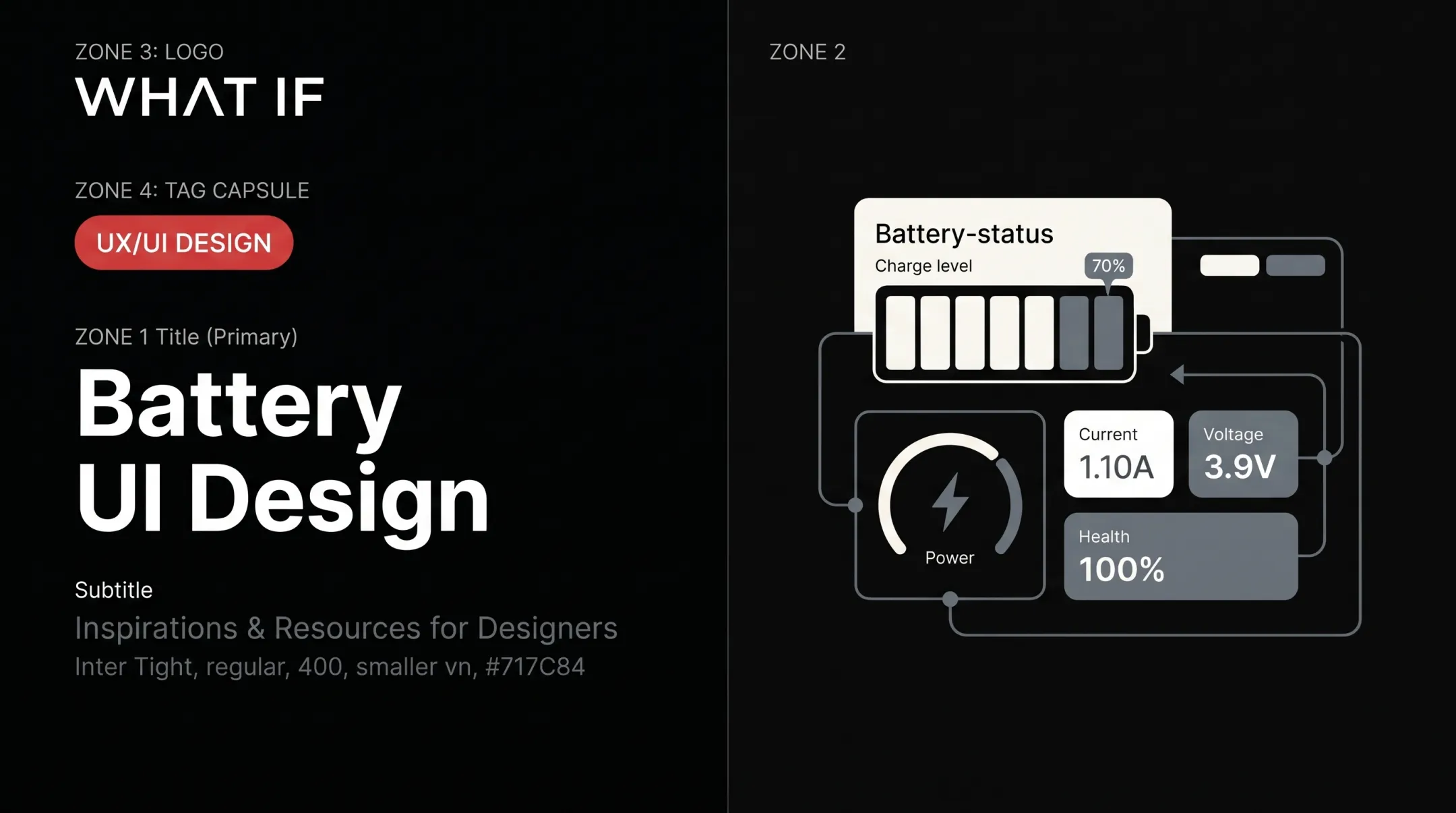
What if Design's Batteryze project, a battery-health dashboard that tracks material value, shows how product data can anchor this kind of experience.
Conclusion
EV web design is becoming a strategic experience layer, not a showcase of vehicles or chargers.
- Immersive storytelling, interactive tools, technical clarity, accessible performance, and trust-led conversion now shape how the industry communicates.
- Early adopters can educate audiences, stand out in a crowded market, and open stronger paths to purchases, partnerships, and funding.
- Choose trends by audience need, business outcome, technical constraint, and credible sustainability claims, not for visual effect alone.
Frequently Asked Questions
What makes a good electric vehicle website?
A clear value proposition, intuitive navigation, trustworthy technical information, and strong visuals. Add proof, fast accessible performance, and a relevant call to action.
What are the latest electric vehicle web design trends?
Immersive product storytelling, interactive calculators and maps, data visualisation, and personalisation. Mobile-first performance, accessibility, and trust-led conversion complete the list.
How can an EV website explain complex technology clearly?
Lead with benefits, use diagrams and plain language, and reveal detail progressively. Back it with verified specifications and optional technical documents.
What should an EV charging website include?
Charger types, connectors, compatibility, locations, and rates or enquiry guidance. Add availability, customer proof, support details, and a clear next step.
How can EV companies make their websites faster and more accessible?
Optimise images and video, use responsive layouts, and keep semantic structure. Support keyboard use, captions, alt text, contrast, and reduced motion, then test on mobile connections.
Should an EV startup work with a specialist web design agency?
Yes, when you must turn complex climate or EV technology into a coherent brand, website, and measurable customer journey. A specialist such as What if Design offers that senior expertise without a large in-house team.